A full house renovation in Birmingham costs whatever the rooms you choose add up to, at the spec tier you pick. Kitchens and bathrooms take the biggest share. Rewiring, damp and structural work push the total up most when they turn up. For a guide price for your house, use the MTR cost calculator.
Last updated November 2026
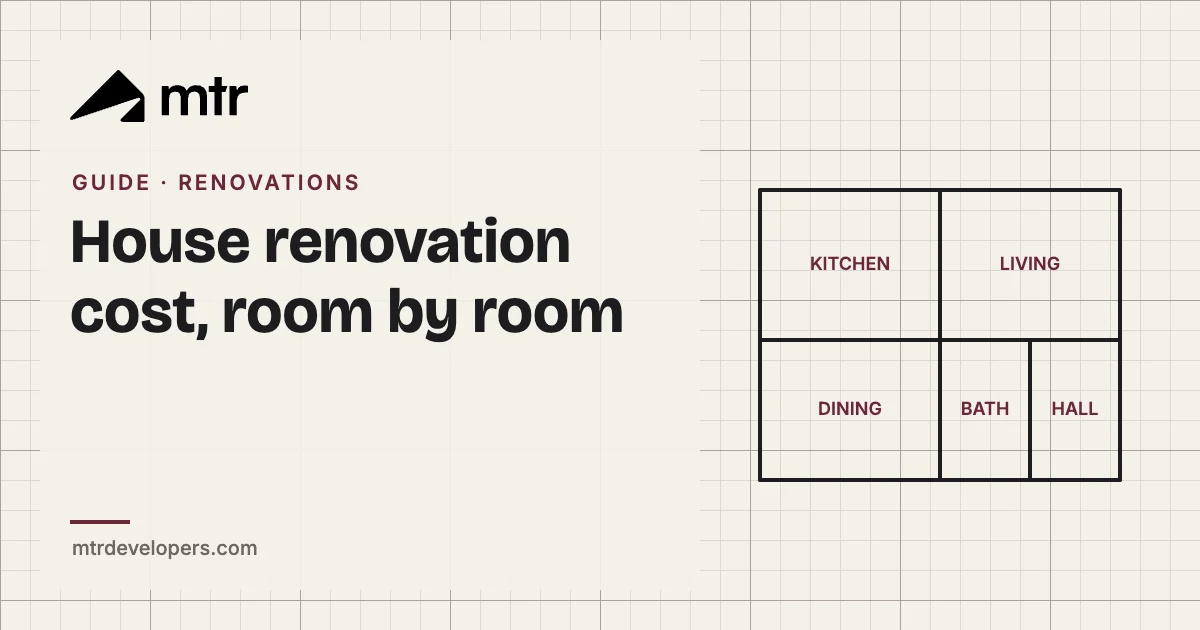
MTR quotes renovations room by room in three spec tiers: Budget, Mid and High, with one price per tier. You pick the rooms and the tier, and the total follows. Put your project into the cost calculator for a guide figure before you ask for a quote.
| Room | What moves the price |
|---|---|
| Kitchen | Units, worktop material, appliances, and whether you move the sink or cooker |
| Bathroom | Moving the toilet or shower, how much you tile, the shower type |
| Living room and bedrooms | Plaster condition, new doors and skirting, fitted storage |
| Hall, stairs and landing | Stair repairs or a new balustrade |
| Flooring | Carpet, laminate, LVT or engineered wood, and levelling old floors |
| Decorating | Number of rooms, ceilings, woodwork and wallpaper stripping |
The kitchen swings the total more than any other room. A Budget kitchen gets you standard units, a basic sink and tap and a laminate worktop. A High spec kitchen with stone worktops and built in appliances costs many times that. Paul prices your kitchen to the units you want, not an average.
Replacing like for like in the same spots costs least. Moving the toilet or shower means new waste runs. Tiling floor to ceiling costs more than tiling around the bath and shower only.
Rewiring. Older Birmingham houses often still have old wiring. A full rewire means lifting floors and chasing walls, so do it before plastering.
Heating. A new boiler or new radiators add to the total. MTR doesn't do gas or electrical work itself; registered trades do it and sign it off.
Plaster. Blown plaster on old walls needs hacking off and redoing.
Damp and timber. Damp or rotten joists only show up once floors come up.
Knocking walls through. Removing a load bearing wall needs a steel beam, structural calculations and building regulations approval.
Budget gets the house clean, safe and finished, with standard fittings you can upgrade later. Mid suits most family homes: better kitchen and bathroom ranges, and flooring that lasts. High covers stone worktops, built in appliances and premium tiles and flooring throughout.
You don't need one tier for the whole house. Most people spend on the kitchen and main bathroom and go Budget on bedrooms and decorating.
Some parts do. Removing a load bearing wall, fitting new windows and some electrical and heating work all come under building regulations. Registered electricians, gas engineers and window fitters can sign off their own work through their trade schemes, so you get a certificate without a separate building control application. Keep every certificate with your deeds.
Price the rooms you need at the tier you want, then hold some money back for what you find once floors come up and plaster comes off. Old houses hide damp, rot and tired wiring. Decide up front which rooms you would drop a tier on if the hidden work costs more than you expected.
This order stops anyone damaging finished work. Adding space at the same time? Read our extension cost guide or loft conversion cost guide, and check whether your extension needs planning permission.
Illustration only. This is not a past MTR job.
You've bought a three bed semi that needs a new kitchen, one bathroom, replastering downstairs, new flooring and decorating throughout. You pick Mid spec for the kitchen and bathroom and Budget for the rest, then run the project through the calculator. The rewire, done by a registered electrician, sits on top. For the approval stages and how they overlap, read how long building work takes.
Not usually for internal work on a house. Listed buildings are different. Knocking through a load bearing wall needs building regulations approval.
Extend first. Structural work makes dust and mess, so finish it before new kitchens, flooring and decorating go in.
No. Paul brings in registered electricians and gas engineers, who certify their own work.
Quotes come back within 3 to 5 working days and stay valid for 30 days.
You can if you work room by room, keeping one bathroom and somewhere to cook running at all times. An empty house lets the trades move faster, so the job finishes sooner.
Usually not. Doing rooms together shares the setup, skips and trade visits. Room by room spreads the spend but costs more overall.
Run your numbers through the cost calculator, or ask for a free quote. Quotes come back within 3 to 5 working days and stay valid for 30 days.